Termite protection for timber decking and wooden roof trusses: Chemical vs. baiting systems: common mistakes that cost you money
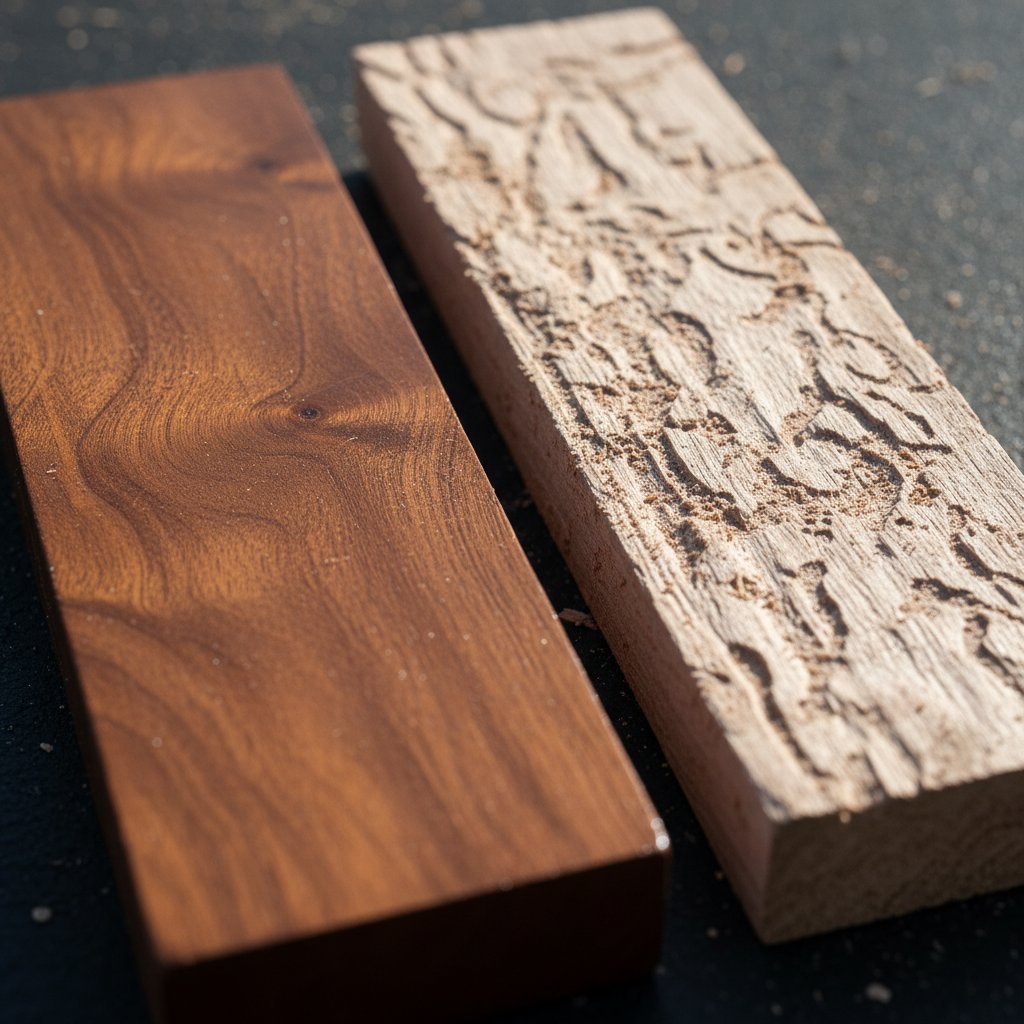
The $10,000 Mistake Most Homeowners Make With Termite Protection
Your beautiful new timber deck or those structural roof trusses represent a serious investment. Yet I've watched countless homeowners flush thousands down the drain by choosing the wrong termite protection—or worse, trying to cut corners on application.
Here's the thing: termites cause over $5 billion in property damage annually in the US alone. Your wooden structures are basically an all-you-can-eat buffet for these destructive insects. But the debate between chemical barriers and baiting systems isn't as straightforward as the pest control guy who knocked on your door last Tuesday made it sound.
Let me break down what actually works, what doesn't, and where people typically waste their money.
Chemical Barriers: The Traditional Fortress Approach
Chemical soil treatments create a protective zone around and under your timber structures. Think of it as an invisible moat that termites can't cross without dying.
The Upside
- Immediate protection: Once applied, you're protected within 24-48 hours. No waiting around.
- Long-lasting coverage: Modern termiticides like Termidor or Premise last 5-8 years when properly applied.
- Proven track record: We're talking 60+ years of field testing and real-world results.
- Better for existing structures: Already built that deck? Chemicals can be trenched around it without major demolition.
- Cost-effective upfront: Expect $1,200-$2,500 for typical residential applications.
The Downside
- Environmental concerns: You're introducing synthetic chemicals into your soil. Not ideal if you've got vegetable gardens nearby or environmentally-conscious neighbors.
- Application gaps are fatal: Miss a spot during trenching? You've just created a termite highway. This is mistake #1 that costs people big.
- Requires soil disturbance: Trenching around your deck means digging, potential landscape damage, and making a mess.
- Degradation over time: That 5-8 year protection? It assumes proper soil conditions. Sandy or highly alkaline soil can cut effectiveness in half.
Baiting Systems: The Strategic Elimination Method
Baiting stations work differently. They don't create barriers—they lure termites to feeding stations loaded with slow-acting toxins that get carried back to the colony.
The Upside
- Eliminates entire colonies: You're not just blocking access; you're wiping out the source. One mature colony can house 300,000+ termites.
- Minimal environmental impact: Stations contain the bait. No widespread chemical application.
- Monitoring built-in: Regular inspections mean you know what's happening before damage occurs.
- Flexible installation: Works around landscaping, pools, and other obstacles without major disruption.
- No re-treatment drilling: Once stations are in, maintenance is simple.
The Downside
- Delayed protection: Takes 3-6 months to eliminate an active colony. Your deck could sustain damage during this window.
- Ongoing monitoring costs: Expect $300-500 annually for inspections and bait replacement. Over 10 years, that's $3,000-$5,000.
- Requires termite cooperation: They have to find and feed at the stations. If they're already munching your trusses, they might ignore the bait.
- Initial investment is higher: Installation runs $2,500-$4,000 for typical properties.
Head-to-Head Comparison
| Factor | Chemical Barriers | Baiting Systems |
|---|---|---|
| Initial Cost | $1,200-$2,500 | $2,500-$4,000 |
| 10-Year Cost | $2,400-$5,000 (with re-treatment) | $5,500-$9,000 (with monitoring) |
| Time to Protection | 24-48 hours | 3-6 months |
| Protection Duration | 5-8 years | Ongoing (with monitoring) |
| Environmental Impact | Moderate to high | Low |
| Best For | New construction, immediate threats | Long-term protection, eco-conscious homeowners |
The Costly Mistakes Nobody Talks About
Mistake #1: Hiring the cheapest bidder. That $800 chemical treatment? The applicator probably skipped proper trenching depth (6 inches minimum) or diluted the product. You'll discover this when termites show up in year two instead of year six.
Mistake #2: Ignoring moisture issues first. Termites need moisture. Fix that leaking gutter or improve drainage before spending a dime on protection. I've seen $3,000 treatments fail because of a $200 drainage problem.
Mistake #3: Choosing baits for active infestations. Your roof trusses are already compromised? Baiting systems are too slow. You need immediate chemical intervention plus structural repairs.
Mistake #4: DIY chemical applications. Professional equipment applies 4 gallons of solution per 10 linear feet at proper pressure. Your garden sprayer? Not even close. You're wasting product and money.
What Actually Makes Sense
For new timber decking: Go chemical during construction. Apply treatment before the final grade, ensuring complete coverage. Cost-effective and immediate.
For roof trusses in new builds: Chemical pre-treatment of the timber itself (borates) plus a perimeter barrier gives you dual protection for under $2,000.
For existing structures in high-risk areas: Hybrid approach. Chemical barrier for immediate protection, then transition to monitoring stations for long-term colony control.
For environmentally sensitive properties: Baiting systems win, despite the higher cost. Just accept the longer timeline and ensure your timber is already treated or protected by other means during the establishment period.
The real secret? Neither system works if you ignore moisture control, soil-to-wood contact, and regular inspections. Save yourself the $10,000 repair bill by spending $500 on annual professional inspections, regardless of which protection method you choose.