Termite protection for timber decking and wooden roof trusses: Chemical vs. baiting systems in 2024: what's changed and what works
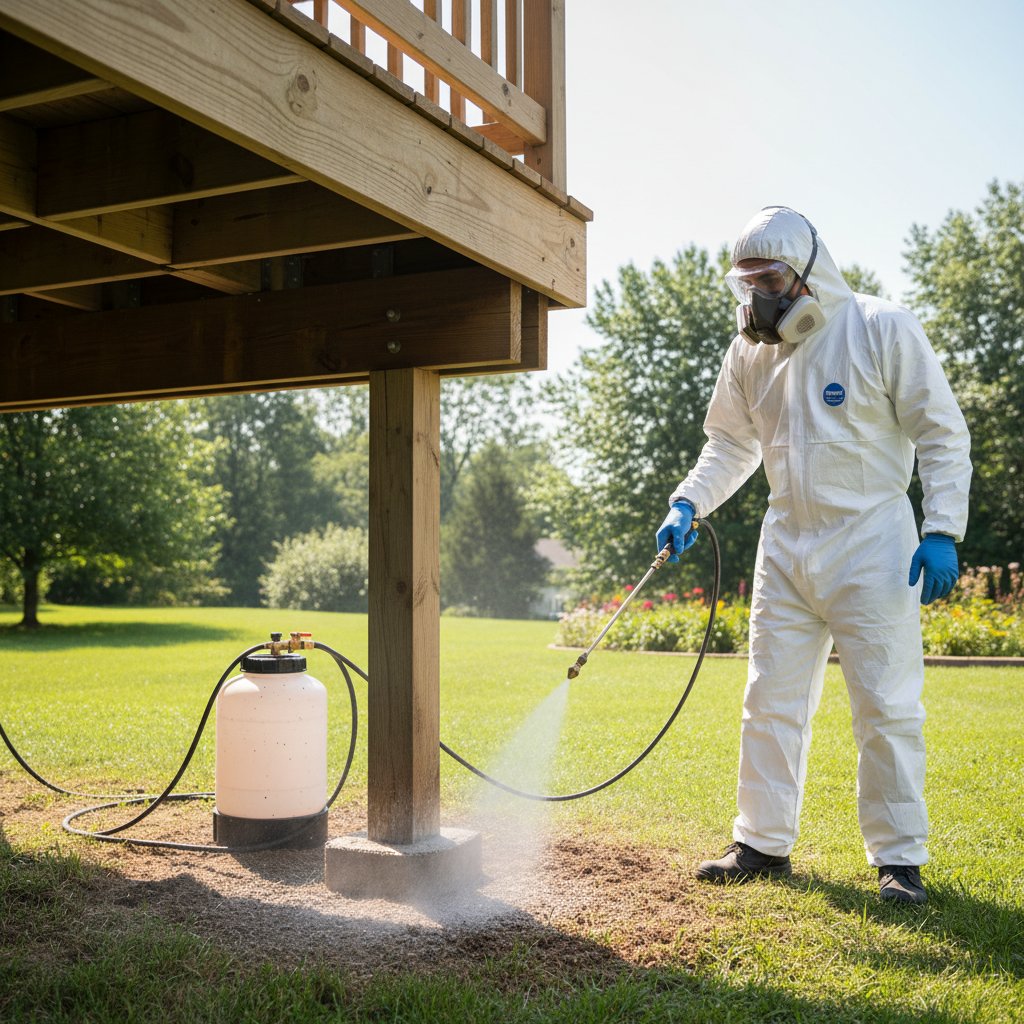
Your timber deck or those roof trusses overhead represent serious money—and they're basically termite candy. I've watched homeowners spend $30,000+ replacing structural timber because they picked the wrong protection strategy or assumed their 2015-era treatment was still doing its job. Spoiler: it probably isn't.
The pest control world has shifted dramatically in the past few years. New formulations, regulatory changes, and some eye-opening research have completely rewritten the playbook. Let's cut through the sales pitches and look at what actually works in 2024.
What's Actually Changed in Termite Protection
1. Chemical Barriers Got Smarter (and Longer-Lasting)
Remember when termiticides lasted maybe 5 years if you were lucky? The latest non-repellent formulations—think products with active ingredients like fipronil or imidacloprid—are now pushing 8-10 year effectiveness windows. The game-changer here is that termites can't detect these chemicals, so they walk right through them, get contaminated, and spread the poison back to their colony before dying.
For roof trusses specifically, you're looking at pre-treatment during construction or targeted injection methods for existing structures. Costs run $800-1,500 for a typical residential roof truss system, depending on accessibility. The catch? You need a licensed applicator, and if your trusses are already installed with limited access points, you might be drilling into your ceiling—not exactly a weekend DIY project.
The real advantage shows up in the data: properly applied modern termiticides show 95%+ effectiveness rates in field studies, compared to 70-80% for older repellent chemicals. That's the difference between sleeping soundly and playing termite roulette.
2. Baiting Systems Finally Earned Their Keep
I'll be honest—five years ago, I was skeptical about baiting systems. Too slow, too finicky, too dependent on termites "finding" the stations. But 2024's systems have addressed most of those complaints. Installation stations are now spaced tighter (every 8-10 feet instead of 15-20), and the bait matrices are significantly more attractive to termite workers.
Here's what makes baiting appealing for decking: zero chemical injection into your timber, which matters if you've got kids doing cartwheels on that deck or you're worried about leaching into garden beds below. You're looking at $1,200-2,000 for a complete deck perimeter system, plus $300-400 annual monitoring costs.
The downside nobody mentions? Baiting takes 3-6 months to eliminate an active colony. If termites are already munching your deck joists, that's 3-6 months of continued damage. Chemical barriers stop them within days. Choose accordingly based on whether you're preventing or responding to an active infestation.
3. Hybrid Approaches Are the New Standard
Smart operators aren't playing the "either/or" game anymore. The most effective 2024 strategy combines chemical soil treatment around your deck footings with above-ground bait stations as a monitoring and backup system. This gives you immediate knockdown power plus long-term colony elimination.
For roof trusses, the hybrid looks different: pre-construction chemical treatment on the timber itself, combined with perimeter soil treatment around the foundation and monitoring stations at 10-foot intervals. Total investment runs $2,500-4,000 for a new build, but you're essentially buying a decade of protection with 98%+ confidence.
Real-world example: A client in coastal Florida (basically termite Disneyland) went hybrid on their deck rebuild in 2022. Two years in, monitoring stations show zero termite activity, while neighbors using single-method approaches have had breakthrough infestations. The extra $800 upfront bought serious peace of mind.
4. Physical Barriers Are Having a Moment
Stainless steel mesh and graded stone barriers sound old-school, but they're seeing renewed interest, especially for decks. Why? Because they never degrade, require zero maintenance, and work through pure mechanical blocking—termites literally cannot chew through 0.66mm stainless steel mesh.
Installation costs run higher initially ($2,000-3,500 for deck perimeter applications), but there's no annual servicing, no reapplication, and no chemical concerns. For roof trusses, physical barriers are trickier since you'd need to wrap connection points and bearing surfaces, which gets labor-intensive fast.
The sweet spot? Use physical barriers at critical transition points—where deck posts meet footings, around roof truss bearing walls—then supplement with chemical or bait systems for broader coverage. You're creating multiple failure points for termite access.
5. Monitoring Technology Actually Works Now
Those "smart" termite sensors that promised early detection? They've graduated from gimmick to genuinely useful. 2024 systems use acoustic sensors and moisture detection to alert you via smartphone when termites are actively feeding within 50 feet of a sensor node.
This matters because you're not waiting for quarterly inspections to discover damage. You get alerts within days of termite arrival, giving you time to respond before they reach your expensive timber. System costs run $600-1,200 installed, plus $15-25 monthly monitoring fees.
For high-value applications like custom hardwood decking or engineered roof truss systems, this early warning system can prevent catastrophic damage. One sensor near your deck perimeter and one in your roof cavity gives you coverage where it counts most.
The Bottom Line
Your best move in 2024? Stop thinking about termite protection as a one-time treatment. The properties showing zero termite damage over 5+ years are using layered approaches: chemical barriers for immediate protection, baiting systems for colony elimination, physical barriers at vulnerable points, and monitoring tech for early warning.
Yes, comprehensive protection costs more upfront—figure $3,000-5,000 for a complete deck and roof truss strategy. But compare that to $15,000-40,000 in structural repairs, and suddenly it's the bargain of the century. Your timber isn't getting any cheaper to replace, and termites definitely aren't getting less hungry.